16 Aug 2026
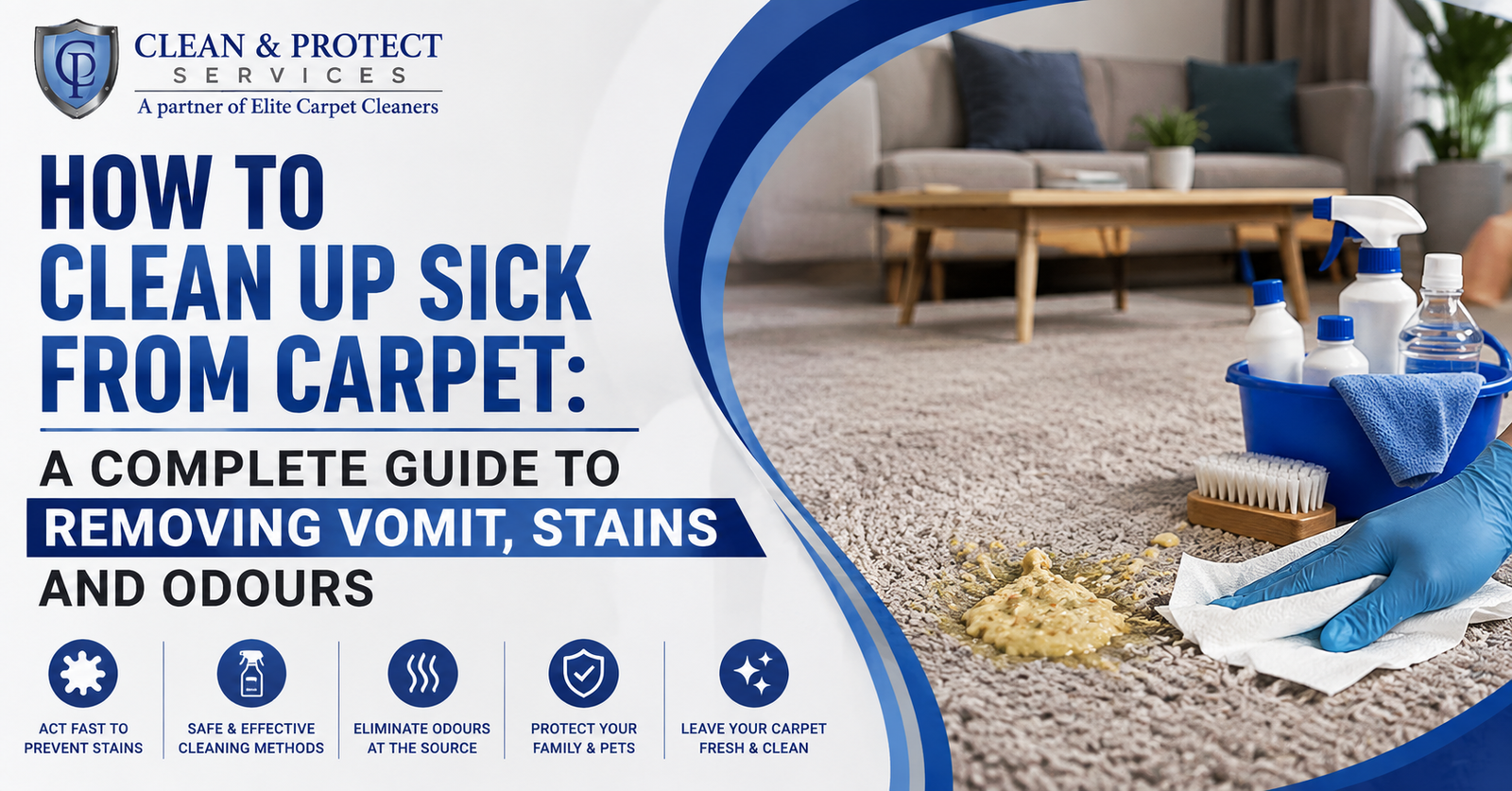
How to Clean Up Sick From Carpet: A Complete Guide to Removing Vomit, Stains and Odours
Accidents happen, especially in busy family homes. If someone has been sick on the carpet, cleaning it up quickly and correctly is important—not only to remove the visible mess, but also to deal with the moisture, particles and unpleasant odour that can remain in the carpet fibres.
Vomit can be particularly difficult to clean because it contains both solid and liquid material. If it is rubbed into the carpet or allowed to dry, it can penetrate deeper into the pile and potentially leave a persistent stain or smell. When vomiting is associated with a stomach illness, there is also an added hygiene consideration, so appropriate precautions should be taken while cleaning.
The good news is that a fresh spill can often be dealt with at home when the affected area is small and the carpet is suitable for spot cleaning. The key is to remove the solid material carefully, absorb as much moisture as possible, use a suitable carpet-safe cleaning product, rinse away residue and dry the area thoroughly.
This guide explains how to clean sick from carpet step by step, what cleaning products to avoid, how to deal with lingering smells, and when professional carpet cleaning is the better option.
What You Need Before Cleaning Sick From Carpet
Before starting, gather the necessary supplies so you can clean the affected area without repeatedly leaving and returning to it.
You may need:
- Disposable gloves
- Disposable paper towels or absorbent towels
- A plastic bag for contaminated waste
- A spoon or blunt scraper
- Clean white microfibre cloths
- Lukewarm water
- A carpet-safe cleaning solution
- A spray bottle
- A wet vacuum or carpet extraction machine, if available
- A fan to improve ventilation and drying
If the vomit may be related to gastroenteritis or another contagious illness, take additional hygiene precautions. NSW Health recommends wearing disposable gloves when cleaning vomit and using disposable towels to remove contaminated material.
How to Clean Up Sick From Carpet Step by Step
Step 1: Put on Protective Gloves
Before touching the affected carpet, put on disposable gloves.
If there is a significant amount of vomit or you are concerned about exposure to infectious material, additional protective equipment such as a mask or protective clothing may be appropriate. NSW Health specifically recommends gloves when cleaning up bodily fluids and advises careful hand hygiene afterwards.
Keep other household members and pets away from the area until cleaning and drying are complete.
Step 2: Remove the Solid Material Carefully
Do not immediately scrub or pour cleaning solution over the vomit.
Use a spoon, blunt scraper or several layers of disposable paper towel to carefully lift the solid material from the carpet.
Work from the outside towards the centre of the affected area to minimise spreading.
Place the contaminated material directly into a plastic rubbish bag and seal it properly.
The goal at this stage is simply to remove as much of the material as possible without pushing it further into the carpet fibres.
Step 3: Absorb the Remaining Moisture
Once the solid material has been removed, use clean white paper towels or an absorbent white cloth to blot the remaining liquid.
Press down firmly and lift the towel rather than rubbing backwards and forwards.
Continue replacing the towel as it becomes saturated.
Avoid using coloured towels because dyes can potentially transfer to damp carpet. The Carpet and Rug Institute similarly recommends white absorbent materials and advises blotting rather than scrubbing when dealing with carpet spills.
Step 4: Apply a Suitable Carpet Cleaning Solution
After removing as much of the contamination as possible, apply a small amount of a carpet-safe cleaning product according to its manufacturer’s instructions.
Do not flood the carpet.
A spray bottle can help control the amount of moisture applied to the affected area.
If you are using a new product, test it first in an inconspicuous area to check for colour transfer or damage. Carpet cleaning guidance recommends pre-testing spot removal products before applying them to a visible area.
Allow the product to work for the time recommended on its label, then gently blot the area with a clean white cloth.
Step 5: Rinse Away Cleaning Residue
Cleaning products can leave residue behind if they are not properly removed.
After treating the stain, lightly apply clean lukewarm water and blot again.
Do not saturate the carpet.
The Carpet and Rug Institute notes that cleaning-product residue can contribute to rapid re-soiling, which is why thorough rinsing and careful moisture removal are important.
Repeat the process only as necessary and avoid repeatedly adding chemicals to the same area.
Step 6: Dry the Carpet Thoroughly
Drying is one of the most important parts of the process.
Excess moisture trapped beneath the carpet surface can contribute to musty smells and, under suitable conditions, microbial growth.
Improve airflow by:
- Opening windows where practical
- Running fans
- Keeping furniture away from the damp area
- Using a wet vacuum or extraction machine to remove excess moisture
Professional carpet cleaning systems commonly use extraction followed by air movement to accelerate drying.
Do not cover the area with rugs or furniture until it is completely dry.
How to Remove the Smell of Sick From Carpet
Even after the visible mess has disappeared, vomit can leave an unpleasant smell behind.
This usually happens when organic material or moisture has penetrated deeper into the carpet pile or backing.
Simply spraying an air freshener over the area is unlikely to solve the underlying problem. The source needs to be removed first.
After cleaning:
- Make sure all visible material has been removed.
- Treat the affected area with an appropriate carpet-safe cleaner.
- Rinse away excess cleaning solution.
- Extract or blot as much moisture as possible.
- Allow the carpet to dry completely.
- Ventilate the room.
If the odour remains after the surface has dried, the contamination may have reached deeper into the carpet or underlay. In this situation, professional extraction cleaning may be more effective than repeatedly treating the surface.
Can You Use Baking Soda on Vomit in Carpet?
Baking soda is commonly used as a household odour absorber, but it should not be considered a substitute for properly cleaning the contaminated area.
If you decide to use baking soda after the carpet has been cleaned and is dry, apply only a light layer and vacuum it thoroughly afterwards if the carpet manufacturer permits this.
Avoid using excessive amounts, particularly on carpets where fine powder could become difficult to remove.
The priority should always be removing the source of the odour rather than simply masking it.
Should You Use Vinegar to Clean Sick From Carpet?
Vinegar is frequently suggested as a DIY carpet cleaning solution, but it isn’t suitable for every carpet.
Different carpet fibres, dyes and backing materials can react differently to household acids and cleaning products.
If you intend to use any homemade solution, check the carpet manufacturer’s care instructions and test the solution in a hidden area first.
For valuable, delicate or heavily contaminated carpets, a purpose-made carpet cleaning product or professional treatment is generally the safer approach.
What Not to Do When Cleaning Vomit From Carpet
Some cleaning mistakes can make the problem worse.
Don’t Scrub Aggressively
Scrubbing can push contamination deeper into the fibres and may damage the carpet pile. Carpet cleaning guidance recommends blotting rather than vigorous brushing or scrubbing.
Don’t Pour Large Amounts of Water Onto the Carpet
More water does not necessarily mean better cleaning. Excess moisture can travel into the backing and underlay, making the carpet harder to dry.
Don’t Mix Cleaning Chemicals
Never combine household cleaning products unless the manufacturer specifically states that they are compatible.
Mixing chemicals can create dangerous fumes or unwanted chemical reactions.
Don’t Use Bleach Without Checking the Carpet
Bleach can permanently remove colour from many carpets and may damage fibres.
Don’t Ignore the Underlay
If a large amount of liquid has soaked through the carpet, cleaning only the visible surface may not be enough. Odour can return if contamination remains underneath.
When Should You Call a Professional Carpet Cleaner?
DIY spot cleaning can be appropriate for a small, fresh accident, but professional cleaning becomes particularly useful when the affected area is large, the vomit has dried, or the smell continues after cleaning.
Consider professional help when:
- The vomit has soaked deeply into the carpet
- The affected area is large
- The carpet has a thick pile
- The spill has reached the underlay
- A strong odour remains after cleaning
- The stain has dried or changed colour
- You have already tried several cleaning products
- The carpet is expensive or delicate
- The incident occurred during a suspected gastroenteritis illness
- You need a more thorough extraction clean
NSW health guidance for contaminated porous surfaces such as carpet recommends professional or industrial carpet cleaning where appropriate, particularly when dealing with body-fluid contamination.
Professional equipment can extract moisture and contamination from deeper within the carpet than surface-level wiping can achieve.
How Professional Carpet Cleaning Helps After a Vomit Spill
A professional carpet cleaning service can assess the carpet material and determine the appropriate treatment rather than relying on a one-size-fits-all cleaning method.
Depending on the carpet and condition, professional cleaning may involve:
- Thorough pre-inspection
- Removal of remaining surface contamination
- Appropriate pre-treatment
- Controlled agitation where suitable
- Hot water extraction or another appropriate cleaning method
- Deodorising treatment
- Thorough moisture extraction
- Accelerated drying
The Carpet and Rug Institute recommends professional cleaning when stubborn spills cannot be effectively removed with normal spot-treatment methods.
For homeowners dealing with a particularly unpleasant accident, professional cleaning can also save time and reduce the risk of repeatedly applying unsuitable products.
If you need professional help keeping your carpets clean and protected, you can learn more about
Clean and Protect and the carpet care services available for Perth homes.
How to Prevent Future Carpet Stains and Odours
Once your carpet has been cleaned, a few simple habits can make future accidents easier to manage.
Vacuum regularly to remove loose dirt before it becomes embedded.
Deal with spills as soon as they happen rather than allowing them to dry.
Keep suitable carpet-safe cleaning products available for emergencies.
Avoid wearing outdoor shoes across carpeted areas.
If you have young children or pets, consider professional carpet cleaning at appropriate intervals.
A professional protective treatment can also help reduce the rate at which spills penetrate carpet fibres. Protection does not make carpet completely stain-proof, but it can provide additional time to respond to accidental spills before they become deeply absorbed.
Frequently Asked Questions
What is the fastest way to clean sick from carpet?
Remove the solid material carefully, blot the remaining liquid, treat the area with an appropriate carpet-safe cleaner, rinse away residue and dry the carpet thoroughly. Acting quickly can make stain and odour removal considerably easier.
Can vomit permanently stain carpet?
Yes. Some vomit contains food dyes, acids, pigments or other substances that can affect carpet fibres. Delayed cleaning can also allow the material to penetrate deeper into the carpet, increasing the chance of staining.
How do you get the smell of vomit out of carpet?
The most effective approach is to remove the source rather than simply masking the smell. Thorough cleaning, controlled rinsing, moisture extraction and complete drying are important. Persistent odours may indicate contamination deeper in the carpet or underlay.
Can I use a carpet cleaner machine?
A carpet extraction machine may be useful for suitable carpets, but always follow the carpet manufacturer’s cleaning instructions. Using too much water or the wrong cleaning solution can cause additional problems.
Should I use bleach on vomit stains?
No, bleach should not be used on carpet unless the manufacturer specifically confirms that it is safe. It can cause permanent colour loss and fibre damage.
Is professional carpet cleaning necessary after someone is sick?
Not necessarily for every small household accident, but professional cleaning is worth considering when contamination is extensive, the smell remains, the carpet has been heavily soaked, or you are concerned about thorough removal.
Final Thoughts
Knowing how to clean up sick from carpet quickly can prevent a small accident from becoming a stubborn stain or lingering odour. Start by protecting yourself, carefully remove the solid material, blot rather than scrub, use an appropriate carpet-safe cleaning solution, rinse away residue and dry the area thoroughly.
The most important mistake to avoid is over-wetting or aggressively scrubbing the carpet. These approaches can spread contamination, damage the fibres and make drying more difficult.
For small, fresh spills, careful spot cleaning may be enough. However, if the vomit has soaked deeply into the carpet, the odour continues after cleaning, or the area is heavily contaminated, professional extraction cleaning can provide a more thorough solution.
Regular maintenance and prompt attention to spills can help keep carpets cleaner, fresher and in better condition for longer.

 perthnw@elite.com.au
 1300-012-0013