20 Aug 2026
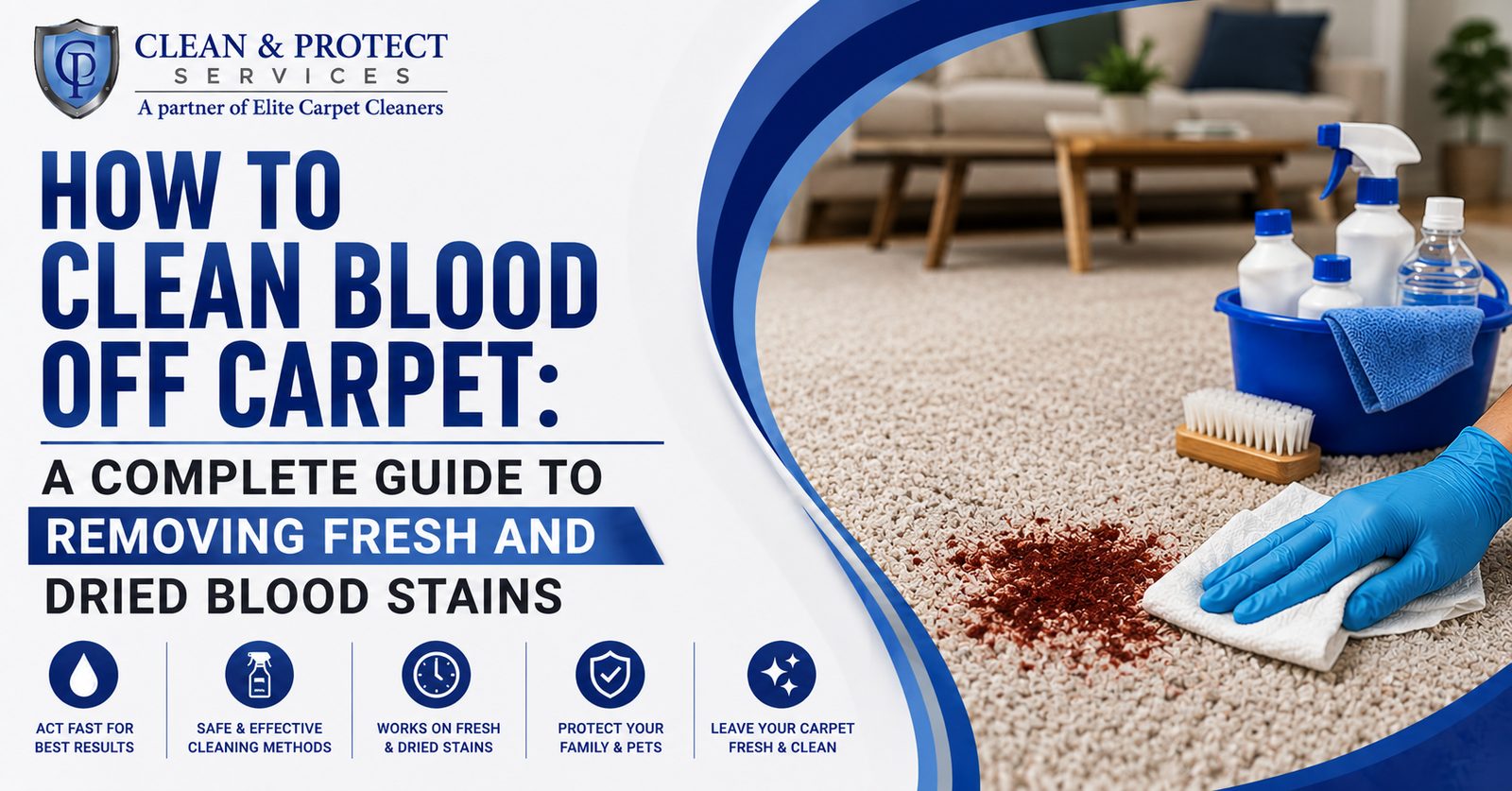
How to Clean Blood Off Carpet: A Complete Guide to Removing Fresh and Dried Blood Stains
Accidental cuts, nosebleeds, shaving injuries, or minor household accidents can leave blood on your carpet without warning. Because blood contains proteins that can bond with carpet fibres, leaving a spill untreated can make the stain increasingly difficult to remove.
The good news is that a fresh blood stain can often be treated at home if you act quickly and use the right technique. The most important thing is to avoid making the stain worse. Scrubbing, using excessive heat, applying too much water, or reaching immediately for strong chemicals can spread the stain or damage the carpet.
The best approach depends on whether the blood is fresh or dried, the type and colour of the carpet, and whether the stain has penetrated beyond the carpet fibres.
This guide explains how to clean blood off carpet safely and effectively, including what to do immediately after an accident, how to deal with dried blood, which household cleaning solutions may help, what mistakes to avoid, and when professional carpet cleaning is the better option.
What to Do Immediately After Blood Gets on the Carpet
The sooner you deal with a blood spill, the better.
Fresh blood is generally easier to remove than an older stain because it has had less time to dry and bond with the carpet fibres. Instead of waiting for the stain to dry, begin by carefully removing excess moisture.
Before cleaning, put on disposable gloves, particularly if the blood belongs to another person. Avoid unnecessary contact with the blood and wash your hands thoroughly after cleaning.
Once you’re ready, follow these basic steps:
- Protect yourself with disposable gloves.
- Keep children and pets away from the affected area.
- Blot fresh blood with a clean white absorbent cloth or paper towel.
- Avoid rubbing or scrubbing the carpet.
- Use a small amount of cold water to help loosen the stain.
- Blot repeatedly rather than soaking the carpet.
- Treat any remaining stain with a suitable carpet-cleaning solution.
- Rinse away cleaning residue.
- Dry the area thoroughly.
The Carpet and Rug Institute recommends acting quickly, blotting with a dry white absorbent material, and working gently from the outside of the stain towards the centre rather than rubbing it into the carpet.
What You Need to Remove Blood From Carpet
You don’t necessarily need a large collection of cleaning products to treat a small blood stain.
For a basic spot-cleaning job, gather:
- Disposable gloves
- White paper towels
- Clean white microfibre cloths
- Cold or cool water
- A spray bottle
- A mild carpet-safe cleaning solution
- A spoon or blunt scraper for dried material
- A dry absorbent towel
- A fan for faster drying
White cloths are preferable because coloured towels can potentially transfer dye onto damp carpet.
If you’re using a commercial carpet stain remover, always follow the manufacturer’s instructions and test it in a hidden area before treating the visible stain.
How to Clean Fresh Blood Off Carpet
Fresh blood should be treated as soon as possible.
The objective isn’t to soak the stain or aggressively scrub it. Instead, you want to gradually lift the blood from the fibres and transfer it into an absorbent cloth.
Step 1: Put on Disposable Gloves
Wear disposable gloves before beginning.
This protects your hands from direct contact with blood and helps maintain better hygiene during the cleaning process.
If the blood is from another person, avoid touching your face or other surfaces while wearing contaminated gloves. Dispose of the gloves appropriately once the cleaning process is complete and wash your hands thoroughly.
Step 2: Blot the Fresh Blood
Place a clean white paper towel or white microfibre cloth over the affected area.
Press gently and lift.
Do not rub the carpet backwards and forwards.
Continue blotting with clean sections of the cloth until you’re no longer transferring significant amounts of blood.
If the cloth becomes saturated, replace it rather than continuing to use the same section.
Blotting is important because rubbing can spread the stain and potentially damage the carpet pile.
Step 3: Apply a Small Amount of Cold Water
Lightly dampen the stained area with cold water.
Don’t pour a large amount of water directly onto the carpet.
A spray bottle is useful because it allows you to apply a controlled amount of moisture.
Blot the area again with a clean white cloth.
Repeat this process several times if necessary.
The goal is to loosen and lift the blood without soaking the carpet backing or underlay.
Step 4: Treat Remaining Discolouration
If a small amount of staining remains after blotting with water, use a suitable carpet-safe stain remover according to its instructions.
For a simple detergent solution, the Carpet and Rug Institute recommends a very dilute mixture of liquid dishwashing detergent and water for blood stains. The organisation specifically warns against using stronger concentrations because excess detergent can leave residue and contribute to rapid resoiling.
Always test the solution on an inconspicuous part of the carpet first.
Apply the cleaning solution to a white cloth rather than flooding the carpet.
Gently work from the outside of the stain towards the centre and blot.
Step 5: Rinse the Area
Once the stain has been removed, lightly rinse the area with clean water.
This helps remove remaining cleaning-product residue.
Don’t saturate the carpet.
Use a clean cloth to blot away the moisture until the area is only slightly damp.
Step 6: Dry the Carpet Completely
Drying is an important final step.
Use a dry towel to absorb as much moisture as possible.
Then improve airflow by opening windows or running a fan.
Avoid placing furniture directly over the damp area.
The carpet should be completely dry before normal foot traffic resumes.
How to Clean Dried Blood Off Carpet
Dried blood is more difficult to remove because the material has already dried onto and around the carpet fibres.
However, you may still be able to improve or remove the stain with careful treatment.
Step 1: Loosen the Dried Material
Do not immediately pour cleaning solution over a large dried stain.
If there is dried material sitting on top of the carpet, gently loosen it with the edge of a spoon or another blunt tool.
Work carefully so you don’t pull or damage the carpet fibres.
Once loosened, carefully remove the dried particles.
Step 2: Vacuum Loose Residue
If the dried blood has broken into small pieces, gently vacuum the area to remove loose particles.
Avoid aggressive brushing.
The purpose of vacuuming is simply to remove dry debris before introducing moisture.
Step 3: Dampen With Cool Water
Lightly apply cool water to the remaining stain.
Give the moisture a short amount of time to soften the dried residue.
Then blot with a clean white cloth.
You may need to repeat the process several times.
Patience is important. Trying to remove a dried stain in one aggressive attempt can cause more damage than the original stain.
Step 4: Use a Carpet-Safe Cleaning Solution
If water alone isn’t enough, apply a suitable carpet stain remover or mild detergent solution.
Always check the carpet manufacturer’s care instructions first.
Apply a small amount to a cloth and gently work towards the centre of the stain.
Blot rather than scrub.
Step 5: Rinse and Dry
After the stain has lifted, rinse the area lightly with clean water and blot away the remaining moisture.
Allow the carpet to dry completely.
If the stain remains visible after several careful attempts, professional treatment may be more appropriate.
Can You Use Cold Water to Remove Blood From Carpet?
Cold or cool water is commonly recommended for fresh blood stains because heat can make protein-based stains more difficult to remove.
For a fresh blood spill, start with a small amount of cool water and blot rather than scrubbing.
The Carpet and Rug Institute specifically recommends rinsing a treated blood stain with cold water after the cleaning step and blotting until the moisture has been removed.
However, always consider the carpet manufacturer’s care instructions because carpet fibres and dyes can respond differently to moisture and cleaning products.
Should You Use Hot Water on a Blood Stain?
Hot water is not the first choice for treating a fresh blood stain.
Because blood contains proteins, applying excessive heat may make the stain more difficult to remove.
Instead, begin with cool water and controlled blotting.
If you’re using professional carpet extraction equipment, the cleaning process is different from simply pouring hot water onto a stain. Professional cleaners select cleaning methods based on the carpet construction, fibre type and condition.
Can You Use Hydrogen Peroxide on Carpet?
Hydrogen peroxide is sometimes recommended online for blood stains, but it should not automatically be used on every carpet.
It can have a bleaching effect and may change the colour of some carpets.
If you’re considering any peroxide-based product:
- Check the carpet manufacturer’s instructions.
- Test it in an inconspicuous area.
- Wait and observe the result.
- Stop if you notice colour loss or fibre changes.
For valuable, dark, patterned, wool, antique, or delicate carpets, professional advice is safer than experimenting with strong stain-removal chemicals.
Can Baking Soda Remove Blood From Carpet?
Baking soda is better known for absorbing odours than for being a dedicated blood-stain remover.
It should not be relied upon as the primary treatment for a blood stain.
If the carpet has developed an odour after the stain has been removed, baking soda may sometimes be used as part of general odour management, provided it is suitable for the carpet.
The important step is removing the source of the stain rather than simply covering the smell.
Common Mistakes When Cleaning Blood From Carpet
A few common DIY mistakes can make a blood stain more difficult to remove.
Scrubbing the Stain
Scrubbing can spread blood beyond the original affected area and damage carpet fibres.
Blotting is generally the safer approach.
Using Too Much Water
Flooding the carpet can push moisture deeper into the backing and underlay.
It can also significantly increase drying time.
Use controlled amounts of moisture.
Using Too Much Cleaning Product
More cleaning solution doesn’t necessarily mean better results.
Excess product can remain in the carpet and attract dirt.
Follow the product instructions and rinse away residue properly.
Using Several Chemicals at Once
Avoid applying multiple stain removers one after another without rinsing.
Different chemicals can interact unexpectedly, and repeated applications can damage carpet fibres or dyes.
Using Bleach
Household bleach can permanently remove carpet colour and damage fibres.
It should not be used unless the carpet manufacturer specifically states that it is appropriate.
Ignoring the Carpet Backing
A large blood spill may penetrate beyond the surface.
If blood has reached the backing or underlay, cleaning only the visible pile may not completely resolve the problem.
When Should You Call a Professional Carpet Cleaner?
A small fresh blood spot can often be managed with careful DIY spot cleaning.
However, professional carpet cleaning becomes a better option when the stain is large, old, deeply absorbed or resistant to normal treatment.
Consider professional help if:
- The blood stain is large.
- The blood has soaked through the carpet.
- The stain has been present for a long time.
- Several DIY treatments have failed.
- The carpet is expensive or delicate.
- The carpet is wool or another sensitive fibre.
- The stain has affected the underlay.
- A noticeable odour remains.
- You are concerned about hygiene or contamination.
- You don’t know which cleaning solution is safe for the carpet.
Professional cleaners have specialised equipment and experience that allow them to treat stubborn stains without relying solely on household cleaning methods.
The Carpet and Rug Institute also recommends contacting a professional when normal spot-removal procedures do not successfully remove a stubborn blood stain.
How Professional Carpet Cleaning Can Help
Professional carpet cleaning goes beyond treating the visible surface.
Depending on the carpet and the severity of the stain, a professional cleaner may assess:
- Carpet fibre type
- Carpet construction
- Stain age
- Size of the affected area
- Previous cleaning products used
- Moisture penetration
- Condition of the backing
This assessment helps determine the appropriate cleaning method.
Professional extraction equipment can also remove moisture and suspended soil more effectively than household towels alone.
If you’re dealing with recurring carpet stains or want to keep your carpets maintained between unexpected accidents, you can learn more about professional carpet care from
Clean and Protect.
How to Prevent Future Carpet Stains
You can’t prevent every accident, but a few simple habits can make carpet maintenance easier.
Vacuum regularly to remove dry soil before it becomes embedded.
Keep a small carpet-cleaning emergency kit available so you can respond quickly to spills.
Deal with stains as soon as possible instead of allowing them to dry.
Avoid using outdoor shoes on carpeted areas.
Keep food and drinks away from carpet where practical.
If you have pets or children, consider scheduling professional carpet cleaning periodically.
A professional carpet protection treatment can also provide an additional layer of defence against everyday spills and staining. While carpet protection does not make a carpet completely stain-proof, it can give you more time to respond when an accident occurs.
Frequently Asked Questions
What is the best way to clean blood off carpet?
Start by blotting the fresh blood with a clean white cloth, then use a small amount of cool water and continue blotting. If staining remains, use an appropriate carpet-safe cleaning solution, rinse away residue and dry the area thoroughly.
Does cold water remove blood from carpet?
Cold water can help loosen fresh blood and is generally preferable to hot water when initially treating the stain. It may not completely remove an older or deeply embedded stain on its own.
How do you remove dried blood from carpet?
Gently loosen dried material, remove the loose particles, lightly dampen the stain with cool water and blot. If necessary, follow with a suitable carpet-cleaning solution. Persistent stains may require professional treatment.
Can I scrub a blood stain out of carpet?
It is better not to scrub. Aggressive rubbing can spread the stain and damage carpet fibres. Blotting and gentle treatment are generally safer.
Can vinegar remove blood from carpet?
Vinegar is often recommended as a DIY cleaning ingredient, but it is not appropriate for every carpet. Always check the manufacturer’s care instructions and test any solution in a hidden area before using it on a visible stain.
Can I use bleach to remove blood from carpet?
Bleach can permanently damage or discolour carpet fibres and should not be used unless the carpet manufacturer specifically confirms that it is safe.
What if the blood has soaked through the carpet?
If blood has penetrated into the carpet backing or underlay, surface spot cleaning may not be sufficient. Professional carpet cleaning can provide a more thorough assessment and extraction treatment.
Final Thoughts
Learning how to clean blood off carpet is mainly about acting quickly and using a gentle, controlled approach.
Start by protecting yourself, remove excess blood through careful blotting, use cool water rather than excessive heat, and avoid aggressive scrubbing. If a cleaning product is required, test it first and use only the amount recommended for the carpet.
Once the stain has been treated, rinse away cleaning residue and make sure the carpet dries completely.
Small fresh stains can often be managed at home, but dried, extensive or deeply absorbed blood stains can be much more challenging. If repeated attempts don’t work, continuing to add different household chemicals may make the situation worse. Professional carpet cleaning is often the safer choice for stubborn stains, delicate fibres and contamination that has reached deeper layers.
With prompt treatment, appropriate cleaning methods and regular professional maintenance when needed, you can keep your carpets looking cleaner and help extend their useful life.


 perthnw@elite.com.au
 1300-012-0013