21 Aug 2026
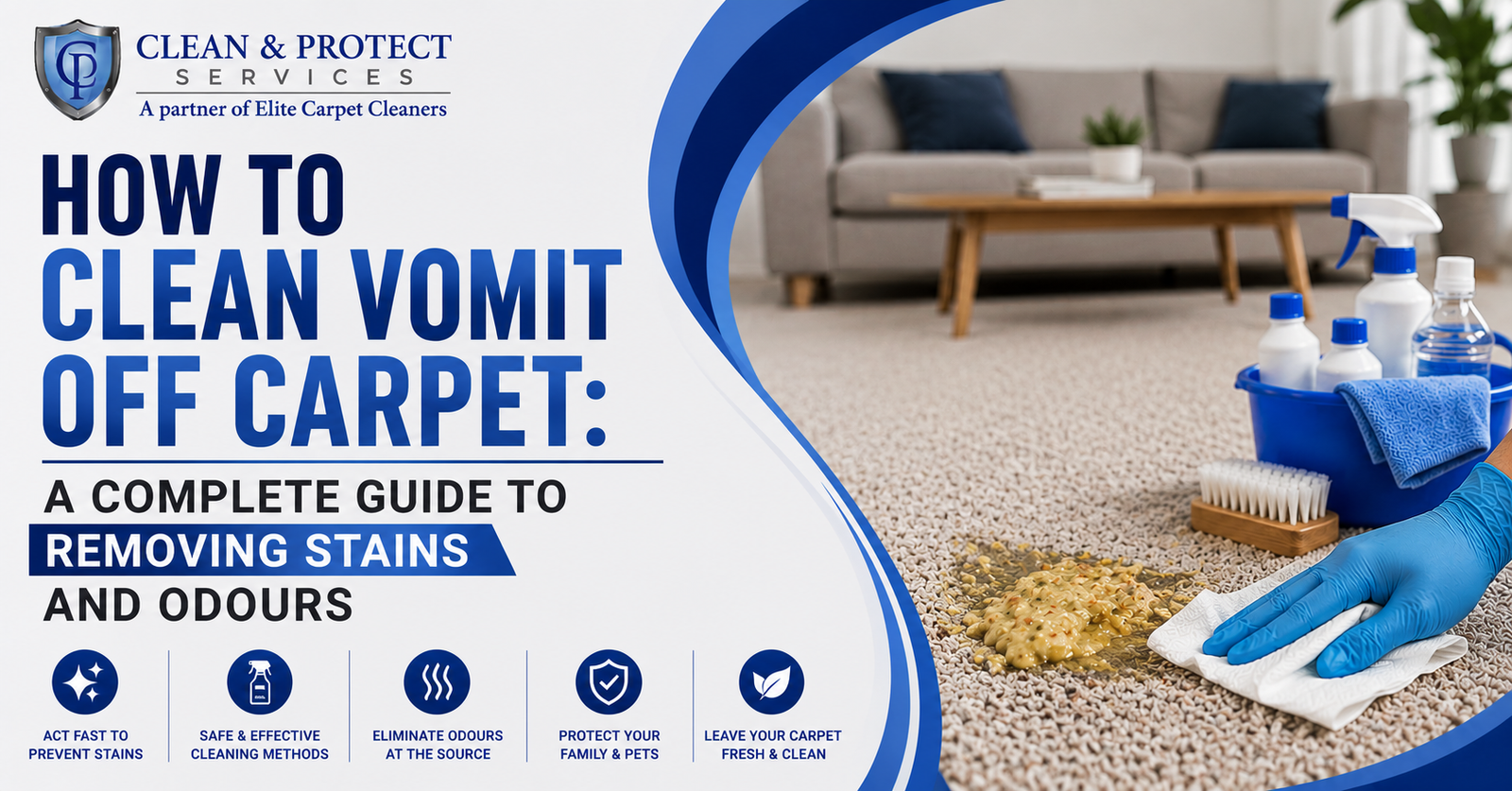
Vomit on carpet is an unpleasant household accident that needs to be dealt with promptly. Whether it happens because of illness, food poisoning, a child becoming unwell, motion sickness, or a pet accident, leaving vomit on carpet for too long can make the stain and odour much harder to remove.
Unlike an ordinary food or drink spill, vomit contains a combination of partially digested food, moisture, stomach acids and organic matter. These substances can work their way into carpet fibres and, when a spill is large enough, potentially reach the carpet backing or underlay. Simply wiping the surface may therefore make the carpet look cleaner without completely removing the source of the smell.
The good news is that a fresh, small spill can often be treated carefully at home. The key is to remove the solid material without spreading it, blot rather than scrub, use an appropriate carpet-safe cleaning solution, avoid excessive water and allow the carpet to dry completely.
This guide explains how to clean vomit off carpet, including methods for fresh and dried vomit, ways to deal with lingering odours, common cleaning mistakes, and situations where professional carpet cleaning may be the better option.
Cleaning vomit as soon as possible can make the entire process easier. Fresh material has had less opportunity to dry onto the fibres or penetrate deeper into the carpet.
As time passes, moisture can evaporate while organic residue remains behind. This can leave a visible mark and an unpleasant smell. If liquid has travelled through the carpet pile into the backing or underlay, the odour may continue even after the surface appears clean.
Quick action also reduces the amount of contamination that can be spread through foot traffic, pets or repeated contact with the affected area.
If the vomiting may be associated with an infectious illness, take appropriate hygiene precautions. Wear disposable gloves, keep unnecessary people and pets away from the area, dispose of contaminated materials appropriately and wash your hands thoroughly after cleaning.
The aim is not simply to make the stain disappear. A good cleanup should remove as much of the vomit and cleaning residue as practical while minimising moisture and preventing unnecessary damage to the carpet.
Gather your cleaning supplies before starting. Having everything ready allows you to deal with the spill efficiently without repeatedly leaving the area.
You may need:
White towels and cloths are preferable because coloured fabrics can potentially transfer dye onto damp carpet.
If you are using a commercial carpet cleaner or stain remover, check the label carefully. Make sure the product is appropriate for the carpet fibre and follow the recommended dilution and application instructions.
Before applying a new cleaning product to a visible area, test it in an inconspicuous location.
Fresh vomit should be cleaned carefully because it contains both solid and liquid material. The objective is to remove as much of it as possible without spreading the contamination or pushing it deeper into the carpet.
Put on disposable gloves before touching the affected area.
If there is a possibility that the person who vomited has a contagious illness, take additional hygiene precautions. Keep children and pets away while the area is being cleaned.
Avoid touching your face or other household surfaces while wearing contaminated gloves.
Once you have finished, remove the gloves carefully and wash your hands thoroughly.
Do not begin by scrubbing the carpet or immediately pouring cleaning solution over the mess.
Use a spoon, blunt scraper or several layers of paper towel to carefully lift the solid material from the carpet.
Start around the outside of the affected area and work towards the centre. This helps prevent the mess from spreading into clean sections of carpet.
Place the removed material directly into a rubbish bag and close the bag appropriately.
If some of the material has already dried, loosen it carefully rather than scraping aggressively.
The purpose of this first stage is to remove the bulk of the contamination before introducing additional moisture.
Once the solid material has been removed, use a clean white paper towel or microfibre cloth to absorb the remaining liquid.
Press the towel down gently, hold it for a moment and lift it.
Do not rub backwards and forwards.
Continue blotting with clean sections of the towel until you are no longer transferring a significant amount of moisture.
If the towel becomes saturated, replace it rather than continuing to use the wet section.
Blotting helps lift contamination from the carpet instead of spreading it across a larger area.
After removing as much of the vomit as possible, lightly apply cool water to the affected area.
A spray bottle is useful because it allows you to control the amount of moisture.
Do not pour a large quantity of water directly onto the carpet.
Lightly dampen the area and blot again with a clean white cloth.
Repeat the process if necessary.
The objective is to loosen remaining residue while avoiding unnecessary moisture in the carpet backing and underlay.
If water alone does not remove the remaining residue, use a suitable carpet-cleaning product.
Check the carpet manufacturer’s care instructions before proceeding.
Apply a small amount of the cleaning solution according to its instructions. It is generally better to control the amount of product than to saturate the entire area.
Test the product in an inconspicuous area first and check for colour changes or other damage.
When treating the stain, work gently from the outside towards the centre.
Blot rather than aggressively scrubbing.
Using excessive amounts of cleaning product can leave residue behind, which may attract dirt and cause the treated area to become visibly dirty again.
Once the stain has been treated, lightly rinse the area with clean water.
This helps remove remaining cleaning-product residue.
Avoid flooding the carpet.
Use a clean cloth to blot the area and absorb the moisture.
Continue until most of the moisture has been removed.
Proper rinsing is particularly important when using detergent-based products because leftover residue can affect the carpet’s appearance and attract soil.
Drying is one of the most important parts of the cleanup process.
Use dry towels to absorb as much moisture as possible.
Then improve air circulation by:
If you have suitable extraction equipment, it can help remove moisture more effectively.
Do not put furniture back over the area or cover it with another rug while it is still damp.
The carpet should be completely dry before normal use resumes.
Dried vomit is generally more challenging because the material has hardened around the carpet fibres.
It may require patience rather than aggressive cleaning.
Use the edge of a spoon or another blunt tool to carefully loosen dried residue.
Avoid sharp objects that could cut or pull the carpet fibres.
Work slowly and gently.
The objective is to separate the dried material from the carpet without damaging the pile.
Once the dried material has been loosened, carefully lift it away.
Small dry particles can be removed with a vacuum cleaner if appropriate for the carpet.
Avoid aggressively brushing the area because this can push particles deeper into the fibres.
Lightly mist the remaining stain with cool water.
Allow a short period for the dried residue to soften.
Then blot the area using a clean white cloth.
You may need to repeat this several times.
Avoid soaking the carpet in an attempt to soften the stain faster.
If a visible stain remains, use a carpet-safe cleaning solution appropriate for the carpet.
Follow the product instructions carefully and test it in a hidden area first.
Apply a controlled amount and blot gently.
Older stains can sometimes be more complicated because previous cleaning attempts may have left chemical residue or altered the carpet’s colour.
After treating the stain, lightly rinse the area with clean water.
Blot away as much moisture as possible.
Then allow the carpet to dry completely.
If the stain remains after several careful attempts, avoid repeatedly applying different chemicals. Professional assessment may be a safer approach.
Removing the visible stain does not always eliminate the smell.
Vomit can leave an odour behind when organic residue or moisture has penetrated deeper into the carpet.
Instead of trying to cover the smell with air freshener, concentrate on removing the source.
A useful process is:
If the smell disappears while the carpet is damp but returns once it dries, there may still be contamination deeper in the carpet.
This is particularly common when a large amount of liquid has penetrated into the backing or underlay.
A lingering smell can have several causes.
The contamination may have:
In these circumstances, treating the visible surface repeatedly may not solve the underlying problem.
The most effective approach is to remove the source of the odour and extract remaining moisture.
Ventilation can help once the carpet has been properly cleaned.
For persistent smells, professional extraction and deodorising may be appropriate, particularly when contamination has penetrated deeper into the carpet.
Baking soda is commonly used around the home to absorb or reduce certain odours, but it should not be considered a substitute for cleaning the vomit itself.
If you use baking soda, the carpet should first be cleaned and allowed to dry. Use only an amount that can be thoroughly removed afterwards, and check the carpet manufacturer’s care instructions.
The important point is that baking soda should not be used simply to hide an unresolved vomit odour.
If the smell is strong or keeps returning, there may still be contamination beneath the surface.
Vinegar is frequently suggested as a DIY carpet-cleaning ingredient, but it is not suitable for every carpet.
Carpet fibres, dyes and backing materials can react differently to acidic household solutions.
Before using vinegar or any homemade mixture:
For wool, antique or expensive carpets, professional advice can reduce the risk of accidental damage.
Avoid pouring very hot water directly onto a vomit stain.
For household spot treatment, controlled amounts of cool water are generally a sensible starting point.
Professional hot-water extraction is different from pouring hot water onto a carpet. Professional equipment is designed to apply and extract cleaning solutions under controlled conditions.
The appropriate method depends on the carpet fibre, construction, condition and type of contamination.
Cleaning a carpet incorrectly can sometimes make the original problem worse.
Aggressive scrubbing can spread the contamination and work it deeper into the carpet.
It can also damage carpet fibres and change the appearance of the pile.
Blotting and controlled cleaning are generally safer.
Flooding the carpet can cause moisture to penetrate into the backing and underlay.
This can make the carpet much harder to dry and may contribute to persistent odours.
Use only the amount of moisture necessary for the cleaning process.
Using more detergent does not automatically mean better cleaning.
Excess product can remain in the carpet and attract dirt.
Always follow the manufacturer’s recommended quantity.
Never mix different cleaning products unless the manufacturer specifically confirms that they can be safely combined.
Some combinations can produce dangerous fumes or unexpected chemical reactions.
Use one suitable product at a time.
Bleach can permanently change the colour of many carpets and may damage the fibres.
Do not use bleach unless the carpet manufacturer specifically confirms that it is safe for the material.
If the vomit has soaked through the carpet, the underlay may also be affected.
Cleaning only the visible surface may temporarily improve the appearance while leaving contamination underneath.
This can explain why an unpleasant smell returns after the carpet has dried.
Not every small vomit spill requires professional cleaning.
A fresh, limited accident can often be treated carefully at home.
Professional assistance becomes more appropriate when the contamination is extensive, deeply absorbed or difficult to remove.
If a significant amount of vomit has soaked into the carpet, household towels may not be enough to extract the moisture.
Professional extraction equipment can provide much greater control over moisture removal.
If the carpet continues to smell after cleaning and drying, contamination may have reached deeper layers.
A professional can assess whether the problem is limited to the surface or has penetrated into the backing or underlay.
Wool, antique and other delicate carpets require special care.
Using an unsuitable chemical or cleaning method can cause permanent damage.
For valuable carpets, professional cleaning is often a safer option than experimenting with household solutions.
If you’ve already tried appropriate spot cleaning and the stain remains, avoid repeatedly adding different products.
Multiple chemicals can create residue and potentially affect the carpet’s colour or fibres.
A professional cleaner can assess the previous treatment and choose an appropriate cleaning method.
Professional cleaning can address contamination beyond what is visible from the surface.
Before cleaning, a professional can consider the carpet’s:
This assessment helps determine the most appropriate cleaning approach.
Professional extraction equipment can remove suspended soil, cleaning solution and moisture from the carpet more effectively than ordinary towels.
This is particularly useful when liquid contamination has penetrated beyond the surface.
Professional cleaning may also include appropriate deodorising and moisture-extraction procedures.
The aim is to remove the source of the odour rather than simply cover it with fragrance.
If you need professional carpet care for your home, you can learn more about Clean and Protect and the carpet services available.
You cannot prevent every household accident, but regular maintenance can make carpets easier to keep clean.
Whether the spill is food, drink, mud or another substance, prompt action generally gives you a better chance of removing it before it dries.
Keep suitable cleaning supplies easily accessible.
Regular vacuuming removes loose dirt before it becomes embedded in carpet fibres.
High-traffic areas may need more frequent vacuuming than rooms that receive little use.
A basic carpet emergency kit can include:
Having these items ready means you can respond immediately when an accident happens.
Carpet protection can be useful as a preventive measure after professional cleaning.
A protective treatment can help reduce how quickly some spills penetrate carpet fibres, giving you additional time to respond.
It does not make carpet completely stain-proof, and spills should still be dealt with promptly.
For homeowners interested in maintaining their carpets for longer, Clean and Protect provides professional carpet care solutions.
There is no single schedule that is suitable for every household.
The ideal cleaning frequency depends on factors such as:
As a general maintenance approach, many carpets benefit from professional deep cleaning periodically, with high-traffic homes potentially requiring more frequent attention.
Professional cleaning should also be considered whenever a significant spill, pet accident, water incident or other contamination cannot be adequately managed with normal spot cleaning.
Start by putting on gloves and carefully removing the solid material. Blot the remaining liquid with a clean white cloth, apply a suitable carpet-safe cleaning solution if necessary, rinse away residue and dry the area thoroughly.
Yes. Small amounts of cool water can help loosen remaining residue. Avoid soaking the carpet because excessive moisture can penetrate the backing and underlay.
Remove the contamination thoroughly, clean the affected fibres, rinse away residue and dry the carpet completely. If the smell remains or returns after drying, deeper contamination may require professional extraction cleaning.
Baking soda may help with certain odours, but it should not replace proper cleaning. The source of the contamination should be removed first.
Vinegar may not be suitable for all carpet fibres and dyes. Always check the manufacturer’s care instructions and test any solution in an inconspicuous area before using it.
Bleach can permanently discolour many carpets and damage carpet fibres. It should not be used unless the manufacturer specifically confirms that it is safe.
Gently loosen the dried material with a blunt tool, remove the loose particles, lightly dampen the remaining residue and blot it. A suitable carpet-safe cleaning product can then be used if necessary.
If the contamination has reached the backing or underlay, surface cleaning may not be enough. Professional extraction can help address moisture and contamination below the visible carpet surface.
Drying time varies according to the amount of moisture, carpet construction, ventilation, humidity and cleaning method. Good airflow and effective moisture extraction can help speed up drying.
For a small fresh spill, careful DIY cleaning may be sufficient. Professional cleaning becomes particularly worthwhile when the area is large, deeply saturated, strongly odorous, difficult to clean or located on an expensive or delicate carpet.
Knowing how to clean vomit off carpet can help prevent an unpleasant accident from becoming a stubborn stain or lingering odour.
The most important steps are to act promptly, protect yourself, remove solid material carefully, blot rather than scrub, use suitable cleaning products sparingly, avoid excessive moisture and dry the carpet thoroughly.
Avoid the temptation to use large amounts of water or strong chemicals. These approaches can spread contamination, damage carpet fibres, leave cleaning residue or make the carpet more difficult to dry.
A small, fresh spill can often be managed with careful spot cleaning. However, if vomit has soaked deeply into the carpet, reached the underlay, remained untreated for an extended period or left a persistent smell, professional carpet cleaning may provide a more thorough solution.
Regular vacuuming, prompt attention to spills and periodic professional cleaning can help maintain the appearance and condition of your carpet. Preventive carpet protection can also provide additional time to deal with accidental spills before they penetrate deeply.
Ready To Get Started
Error: Contact form not found.
Error: Contact form not found.
Copyright © Clean and Protect Carpet Dry Cleaning . All rights reserved
Error: Contact form not found.


 perthnw@elite.com.au
 1300-012-0013